Product discovery
Moreways to be found
Find gaps in collection pages and product descriptions that make what you sell harder to discover in search.
Digital Marketing for E-commerce
See what stands between a product search and a customer choosing your store. AI audits your online presence and shows what to improve first.
Your goals
Product discovery
Find gaps in collection pages and product descriptions that make what you sell harder to discover in search.

Product pages
Spot missing detail about materials, sizing, care, and uses, so shoppers can understand the product before they decide.

Customer confidence
Check whether delivery, returns, and useful product information are easy to find from the pages shoppers visit.

Social content
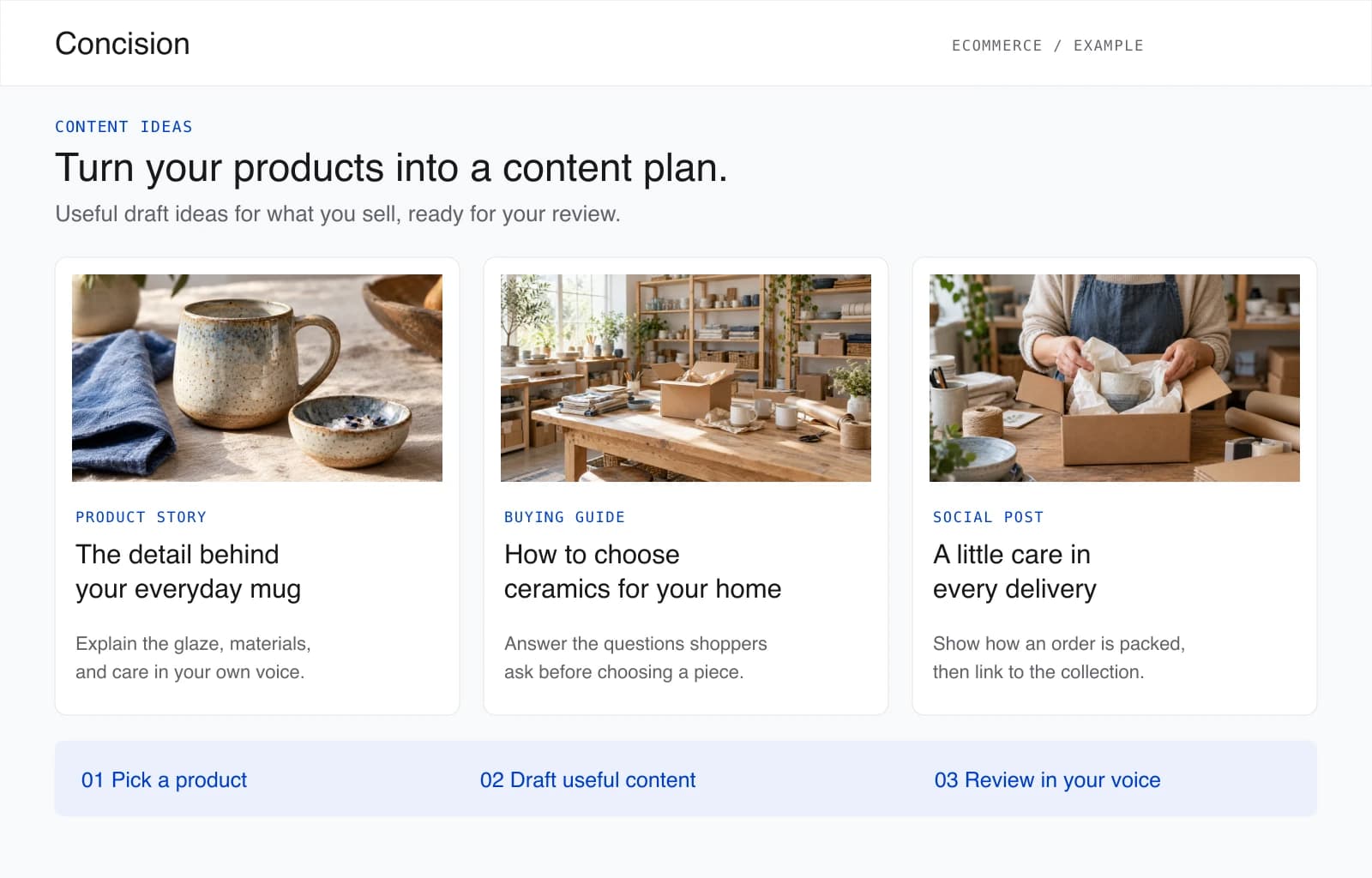
Plan useful posts around your products, their details, and the people behind them, with a next step back to your store.

Competitor gaps
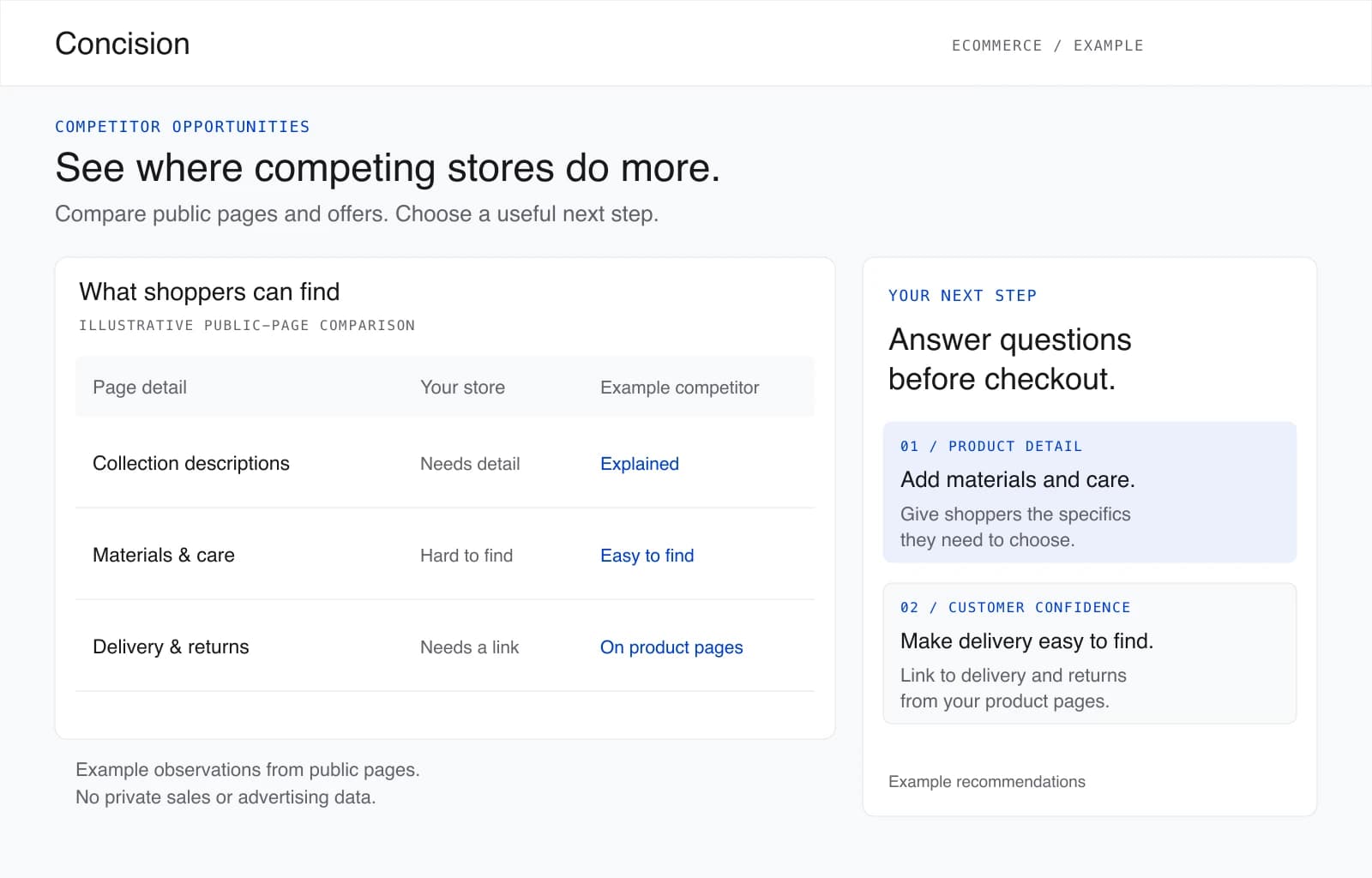
Compare competing stores' public pages, content, and offers to find useful improvements for your own marketing.
What you get
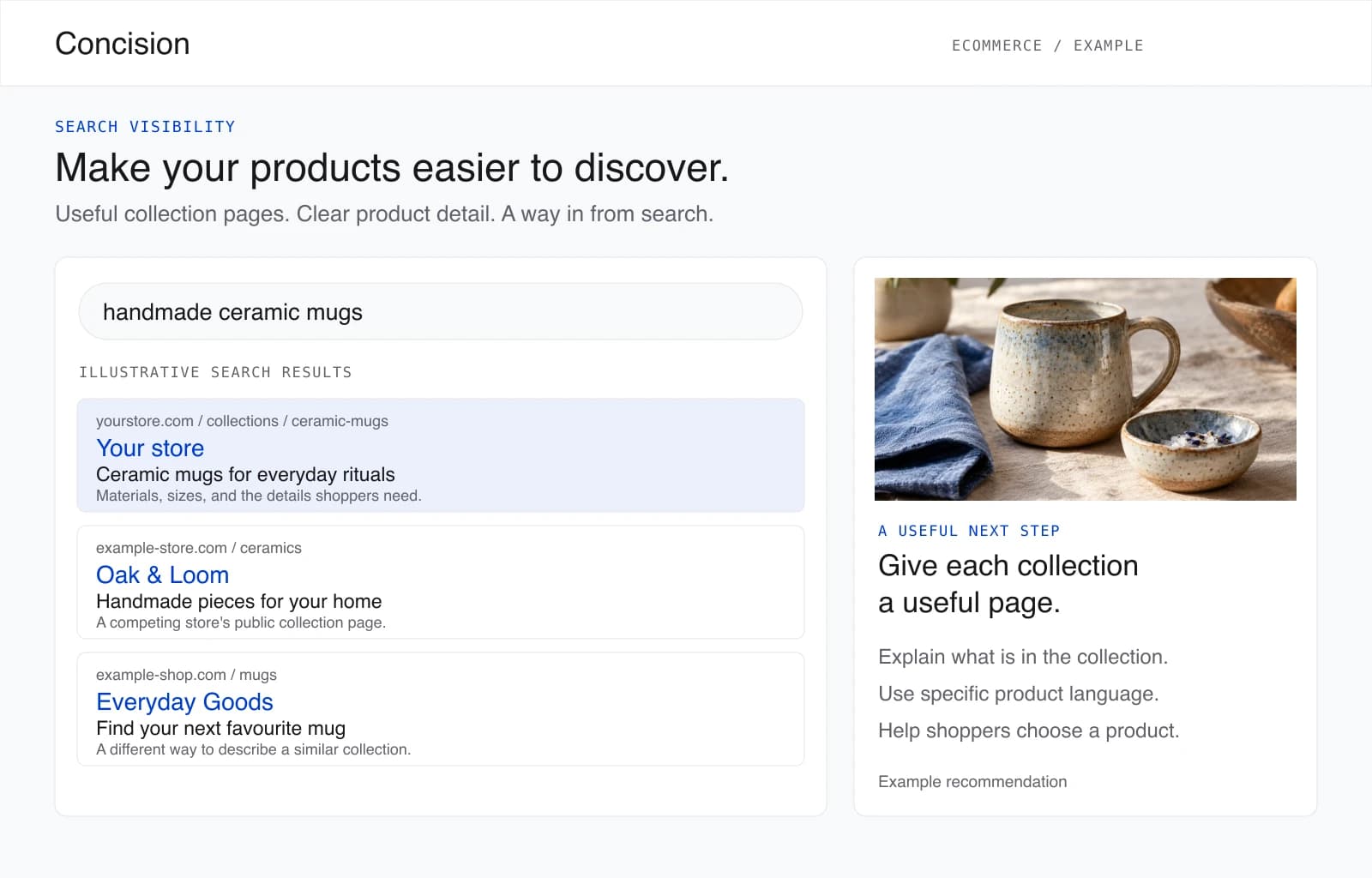
Illustrative examples of public-page checks and draft ideas. Your audit reflects your own store.
Showing: Search visibility
Why now
Useful collection pages and specific product descriptions help shoppers understand what you sell, before they know your brand name.
Explain the details a photo cannot: materials, measurements, care, and what makes this the right product for the shopper.
Put delivery information, returns, and clear next steps where shoppers can find them while they are deciding.
FAQ
How the free AI Audit, weekly content, and review workflow fit into your marketing.
The audit reviews your public store, product and collection pages, search presence, visible social content, and competing stores. It looks for missing information, content gaps, and unclear next steps, then prioritizes improvements to review. A website URL alone does not provide private sales figures, customer records, or advertising account data.
No. Start with the public URL of your existing store. The marketing audit focuses on the pages and information shoppers can access, rather than replacing your store platform. Password-protected pages, private dashboards, and account-only data require additional access and are outside a public website audit.
Concision looks for unclear collection titles, thin product descriptions, missing product information, and search topics your store does not explain well. It compares your public presence with competing stores and suggests where to focus. Useful pages can support discovery, but an audit does not guarantee rankings, traffic, or sales.
Yes. Concision can prepare ideas and drafts for product descriptions, collection copy, buying guides, and social posts based on the gaps it finds. You review the wording, check product facts, and decide what fits your brand. Details such as materials, certifications, stock, and delivery promises should come from your own business information.
It can compare public product and collection pages, content topics, visible offers, and how stores explain delivery or returns. The aim is to find useful gaps and ideas for your own marketing. Public pages do not reveal a competitor's revenue, margins, conversion rate, or return on ad spend.
Submitting your store URL starts an audit and gives you findings and suggested next steps. The public website audit does not edit your product catalog, change prices, publish posts, or spend advertising budget. You review the recommendations and choose what to implement; any connected publishing workflow needs its own setup and permissions.
Enter your website to uncover content, SEO, ad, and competitor opportunities.